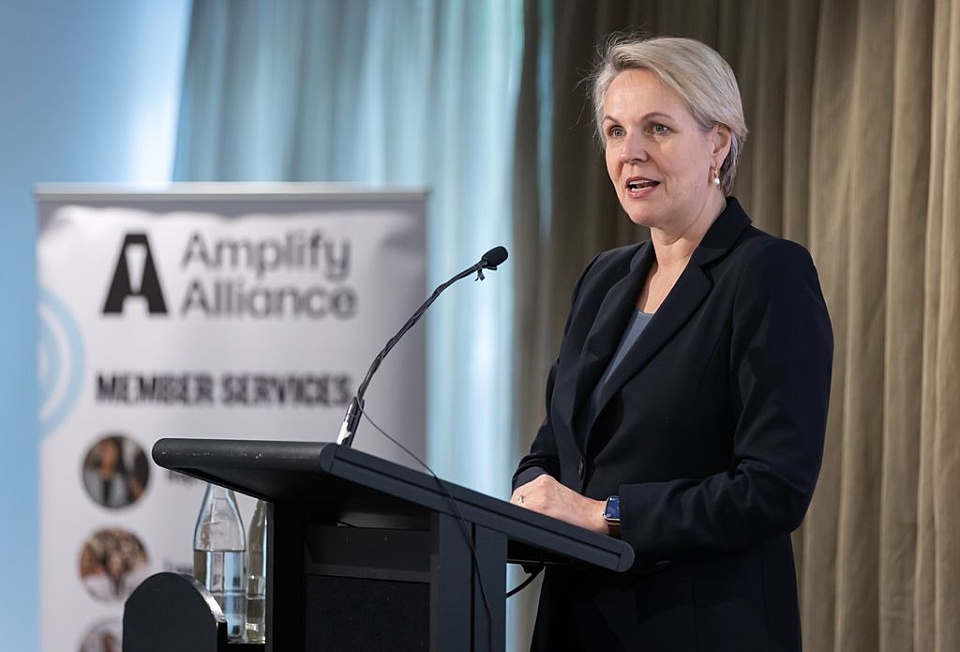
There has been a noteworthy shift in how the Australian Government proposes to fund Family and Community Services (FaCS), and it is one for-purpose organisations should be paying attention to.
At its core, the reform announced by Minister for Social Services Tanya Plibersek in late 2025 is about simplifying the current funding system.
FaCS will trial five-year ‘relational contracts’ with the aim of reducing the administrative burden for delivery organisations and increasing service effectiveness and flexibility. Five current programs – Child and Parenting Support, Family Relationship Services, Communities for Children – Facilitating Partners, Specialised Family Violence Services and Family Mental Health Support Services – will be replaced with a new national program focusing on three funding streams:
- National programs and information services – making sure families across Australia have access to trusted advice and resources, wherever they live.
- Prevention and early intervention – supporting families early, before challenges escalate.
- Intensive family supports – for families who need more targeted, wraparound support.
This will likely come as a welcome relief for those organisations juggling multiple grants with differing reporting requirements. Many providers currently find themselves submitting similar information across different streams, diverting precious time and resources from on the ground service delivery.
The proposed changes signal a greater alignment between government funding strategies and philanthropic grant-making approaches, focusing on shared values, purpose and partnerships and moving beyond transactional relationships to collaborative, trust-based models for greater impact.
As this funding change is likely an indication of broader reform to come, for-purpose organisations should start proactively reviewing their current grant management best practices and seek to align their monitoring, evaluation and reporting processes with collaborative funding models.
Demonstrating Impact: Why Outcome Measurement Matters for Grant Success
These changes reinforce that funders, whether government or philanthropic, are less interested in compliance for compliance’s sake, and more interested in results-driven funding.
Being able to effectively measure and communicate outcomes to showcase how your work benefits the wider community, and what you have learned, will strengthen your position, regardless of the funding source.
Many organisations have an inherent understanding of their impact yet find it difficult to demonstrate their results and bring their story to life, particularly in complex community settings where change is gradual.
Practical monitoring and evaluation (M&E) tools, such as Seer Data’s Seer Impact Measurement Solution, provide valuable resources and guidance for tracking, measuring, and reporting on outcomes.
The key to making M&E easy is to embed it into your program design, development and budgeting from the outset. Building internal capacity in this area enables you to develop persuasive stories that demonstrate your organisation’s achievements and impact.
Show alignment with policy intent, not just eligibility
Trust-based relationships with funders are strengthened when organisations clearly demonstrate their understanding of funding objectives and how their work aligns with those goals, positioning themselves as partners rather than just applicants.
Trust is built over time through reliability, transparency and timely communication, especially when challenges arise.
Investing time and effort into thoroughly completing all acquittal, reporting and accountability requirements on time, including outcomes data and expenditure reports, is essential. Funders require evidence of your achievements, demonstrating you can meet their goals and remain a dependable partner.
Additionally, approaching acquittals as an opportunity rather than an administrative burden allows you to reflect on your program’s success, identify lessons learned, and showcase the positive impacts of your work, not only to funders, but also the broader community.
By strengthening your focus on impact and collaboration, your organisation will be positioned to thrive in the evolving government funding landscape.
Strategic Grants can support you – follow us on LinkedIn to keep up to date on grant trends and funding changes, and use the Best Practice Tracker (download a FREE copy of the Strategic Grants Best Practice Tracker here) to build your capability and grow your grants program!
Additional resources
Read more about the proposed reforms from the Australian Government’s Department of Social Services
Monitoring & Evaluation: 5 Steps to Funder Happiness
How Acquitting Your Grants Can Lead to Securing Consistent Funding
About the author

Michaela Chilcott is a Grants Strategist at Strategic Grants, based in Queensland. She has over a decade’s experience in the for-purpose sector, working across multiple fundraising disciplines for national and Queensland-based charities.
At Strategic Grants, Michaela works with for-purpose organisations to strengthen their grants readiness and embed grants best practices that combine robust impact evidence with meaningful funder engagement.
Michaela’s broad range of fundraising experience provides her with the experience and tools to guide for-purpose organisations through the grant-seeking process and set them up for funding success.