Systems change requires “whole-of-system” capital
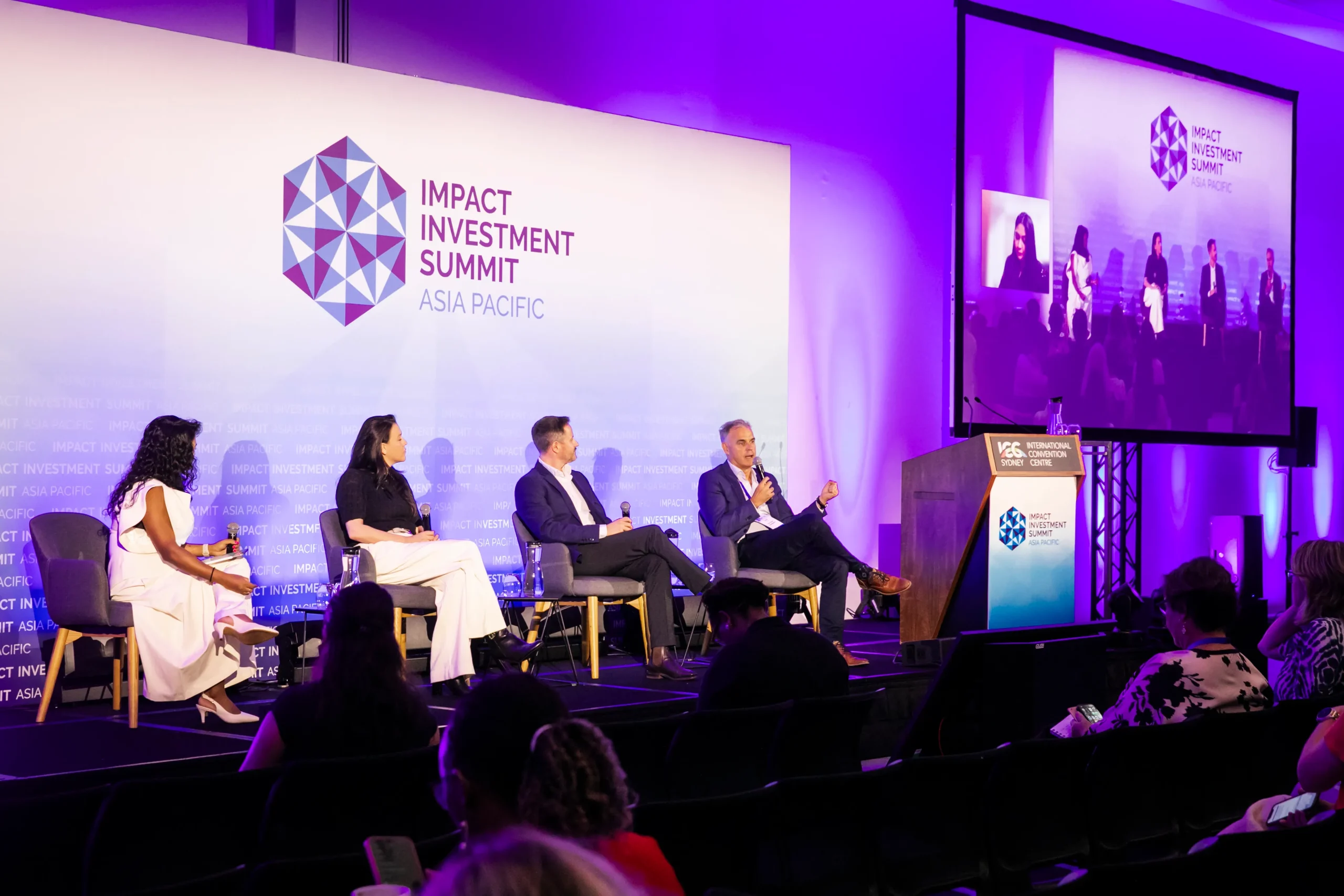
Across two days of discussion at the Impact Investment Summit 2026, a consistent message emerged: impact is not only about selecting a handful of “good” projects—it is about how capital is deployed effectively across an entire system.
That includes philanthropy, government funding, commercial capital, and hybrid approaches. The strongest strategies deliberately align these “stacks” so each plays to its strengths: philanthropy can back innovation and capability-building, government can create enabling infrastructure and policy settings, and private capital can support scalable, sustainable models. Philanthropy has a particular role as the catalytic funding that acts as a vehicle to ‘de-risk’ pilot or early-stage projects, improving readiness and providing the proof of concept required for government and private equity to build upon.
Blended finance can then act as the connector—sharing risk and return across partners to unlock money that might otherwise stay on the sidelines, while offering diversification, clearer roles, and a way to fund outcomes that commercial capital won’t support on its own.
Just as importantly, systems change takes time. Long-term investing—well beyond 10 years—was repeatedly raised as essential for outcomes that compound. The point was framed simply: you don’t “buy” a system; you earn the right to influence it through sustained relationships, credible evidence, and aligned capital.
Measurement should connect the ground truth to decision-makers
There was broad agreement that measurement and reporting are only useful when they connect intention to evidence—and when they translate what is happening “on the ground” into insights that allocators of capital and policymakers can act on.
At the same time, it was acknowledged that communities are complex, and there is no one-size-fits-all outcomes measurement and reporting framework. The recurring recommendation was simple: clearer outcome measures that are transparent, quick to report, and strong enough to guide decisions. This includes using whole-of-organisation evaluation frameworks or reports as fit-for-purpose acquittals where appropriate and designing contracts that reward progress toward outcomes rather than enforcing narrow controls. Frameworks designed this way allow for scalability and for programs to evolve as learnings are incorporated, exactly as you would hope when the ultimate outcome is systemic change.
Trust is a financing strategy, not a “nice to have”
One of the most actionable themes was the link between trust and risk. When funders trust delivery partners, their appetite for experimentation and long-term bets increases. Conversely, low trust tends to show up as heavy compliance, short contract cycles, and “control”—conditions that stifle rather than enable systems change.
A practical example discussed was modest, targeted capacity-building support that organisations can use for impact measurement, data capability, and collaboration—investments that improve the quality of decisions for everyone in the ecosystem.
Shared services were also raised as a way to make collaboration easier and cheaper, rather than expecting organisations to compete for funding one day and collaborate the next.
Capability-building and relationships are part of the “return”
While financial return was a strong conversation focus, there was strong emphasis too on human-to-human connection. Data and information for financial investment decisions is widely available; what differentiates impact leaders is how they communicate, build relationships, and build coalitions that can work toward shared goals. Networks matter because systems are made of people, incentives and institutions; not just capital flows.
A recurring theme throughout the summit was the growing influence of women in capital allocation and the opportunity this creates to re-shape priorities, governance and outcomes. There was a clear call to recognise this significant shift in who holds, manages and directs capital and what it will mean for what gets measured, what gets funded, and how collaboration is incentivised. Definitely a space to watch as the intergenerational wealth transfer continues.
Human agency in the AI era depends on privacy and credible identity
Alongside investing themes naturally sat the AI agenda: if the information economy is broken, systems change becomes harder. Manipulation, misinformation and low-quality automated content can undermine trust, distort incentives and weaken the feedback loops that measurement is meant to strengthen.
In that context, privacy was presented as foundational—not optional—for protecting people’s autonomy. The message was strong regarding AI—keep humans in the driver’s seat as AI becomes more capable. And a reminder that technology does not replace the need for community. People still need safe spaces to meet, sense-make, and decide together, especially when the issues being addressed are “messy” and deeply human.
Scale is designed, not hoped for
How many for-purpose organisations have run a pilot program that has not secured funding to scale? There was a great discussion on the fact that if scaling is the goal, then the mechanism for scaling needs to be built into the pilot from day one—data, delivery capability, partnerships, the budget and economics, and policy pathways. Repeating a proven model can create change; repeating it at scale can shift the system.
The work is integration
Put together, these themes point to a single challenge: integration. Integration of capital types, integration of evidence with decision-making, integration of trust with governance, and integration of technology with human agency. None of these elements work in isolation.
Some key actions for for-purpose organisations and funders alike:
- Be realistic about timeframes: match capital and expectations to the time systems change actually requires.
- Measure what matters: prioritise outcome signals that guide decisions, not reporting volume.
- Fund capability: invest in data, evaluation and collaboration infrastructure.
- Design for scale: build the scaling pathway into pilots from the start.
- Protect agency: treat privacy and credible identity as prerequisites for trustworthy digital systems.
Strategic Grants can support you – follow us on LinkedIn to keep up to date on grant trends and funding changes, and use the Best Practice Tracker (download a FREE copy of the Strategic Grants Best Practice Tracker here) to build your capability and grow your grants program!
Additional resources
Read more about leading through change in a shifting funding landscape
Thinking creatively about funder engagement and reporting
About the author

Jo Garner is the CEO & Founder of Strategic Grants. Jo established Strategic Grants in 2009 and in 2012 she launched what is now GEMS – Grants Expertise Management System – New Zealand and Australia’s largest online grant-seeking management system. Jo leads a passionate team of 35, who are all dedicated to working collaboratively with for-purpose organisations to build their capacity and secure grant funding to deliver vital projects to achieve their mission.
With a background in Business, Marketing, IT and Fundraising, Jo’s strong communication skills and ability to apply strategic thinking and solutions to challenges faced by NFPs, has seen Strategic Grants help hundreds of organisations raise funds to deliver their mission through effective funding and engagement strategies.
Jo is a regular presenter at philanthropy and fundraising conferences and is known for her engaging training techniques and facilitation of strategic planning workshops.